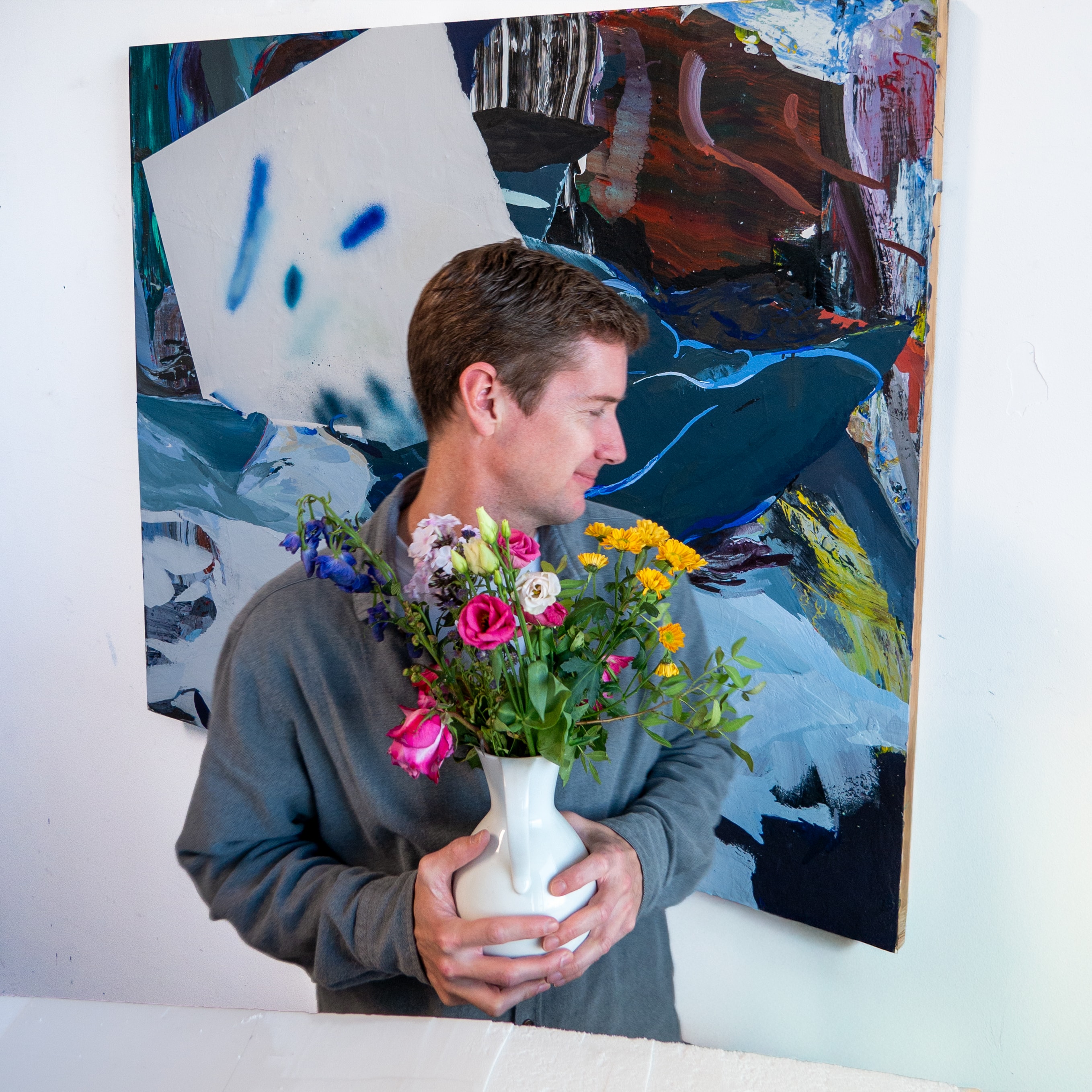
The Paint Shop is pleased to present works by Martin Blake for the first time in the solo exhibition Ambient Flower Reminiscence.
Berlin isn’t by the sea.
Children growing up in a landlocked city will rarely be able to understand how deeply having water right outside their front door shapes young people. The same is probably true of the mountains.
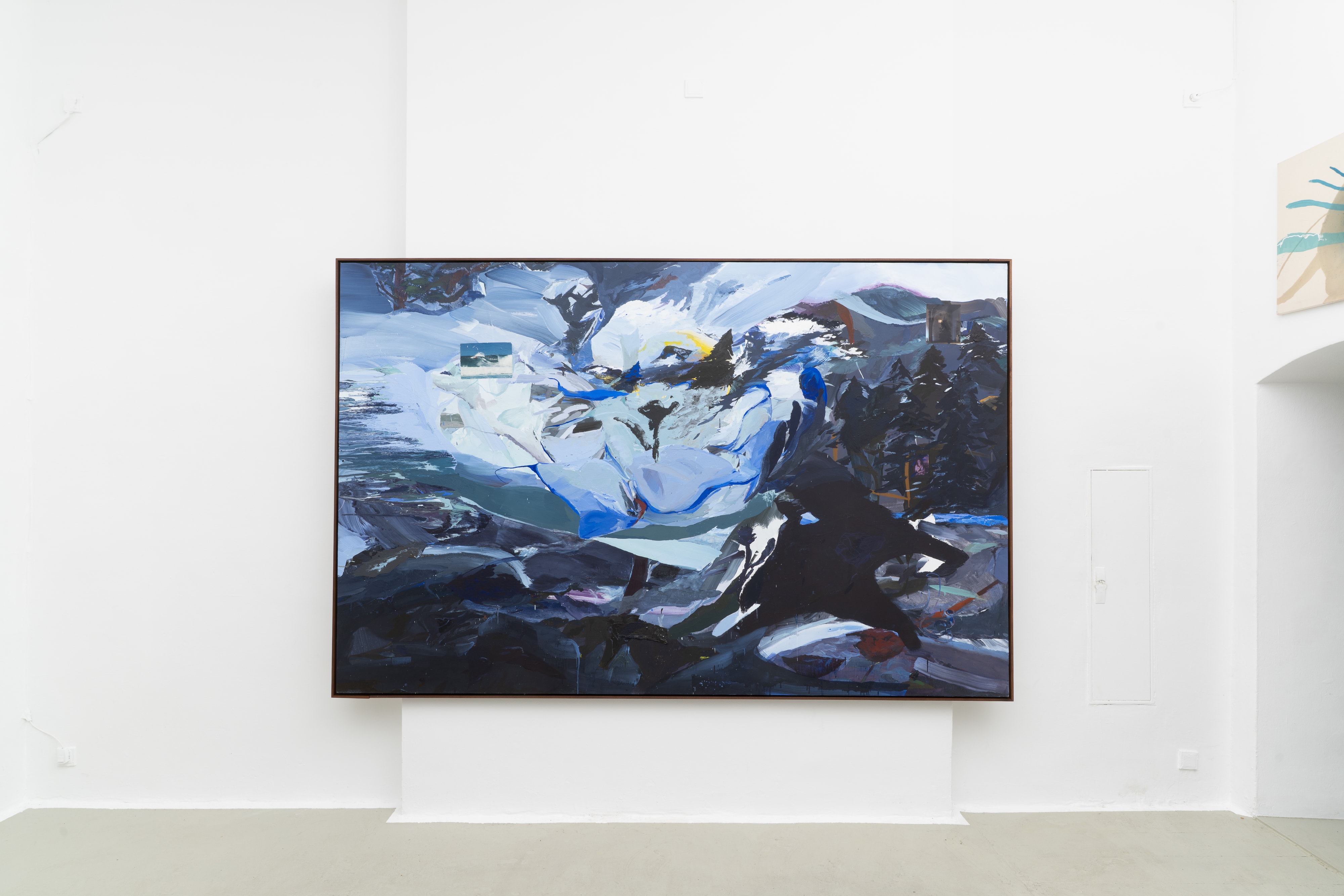
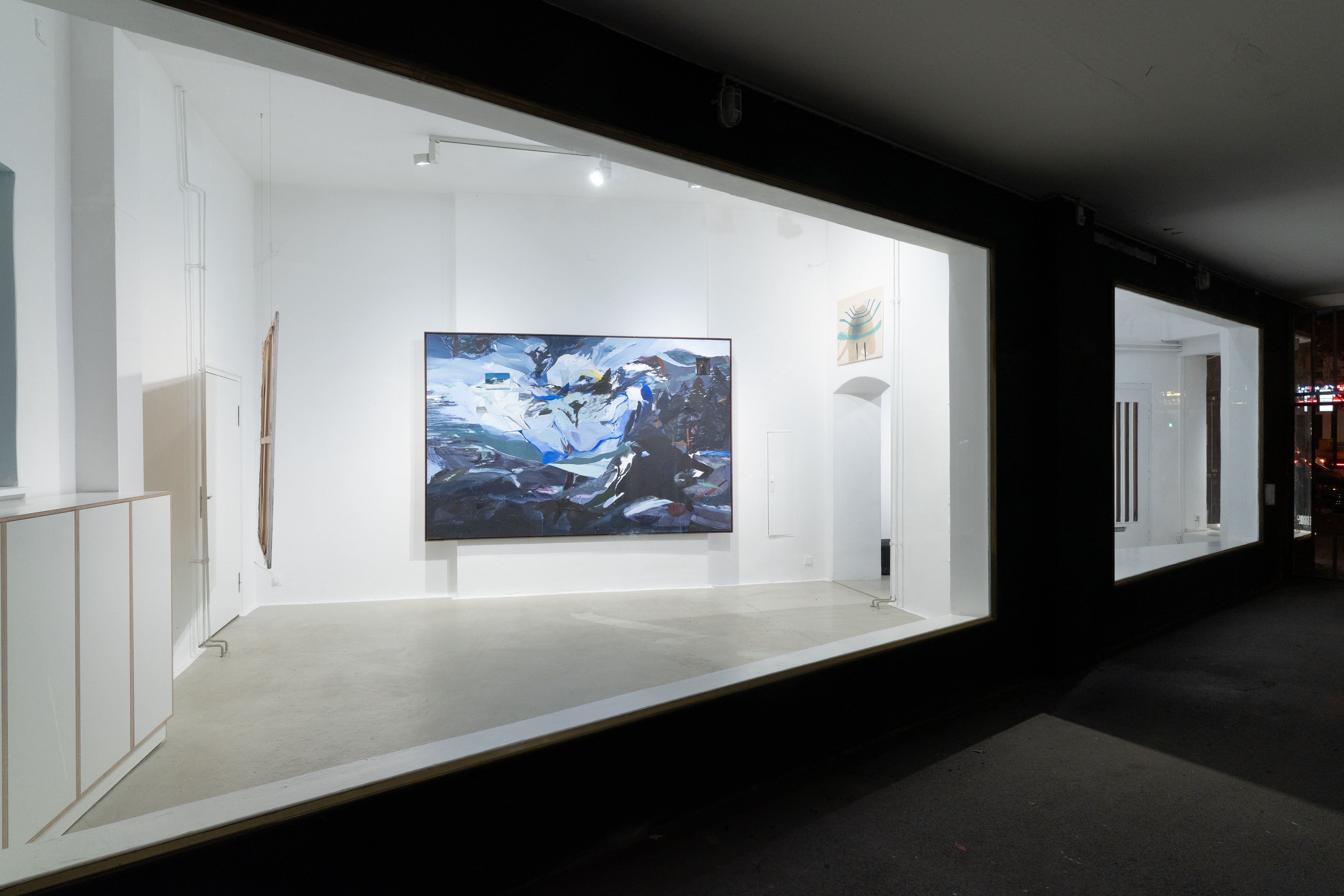
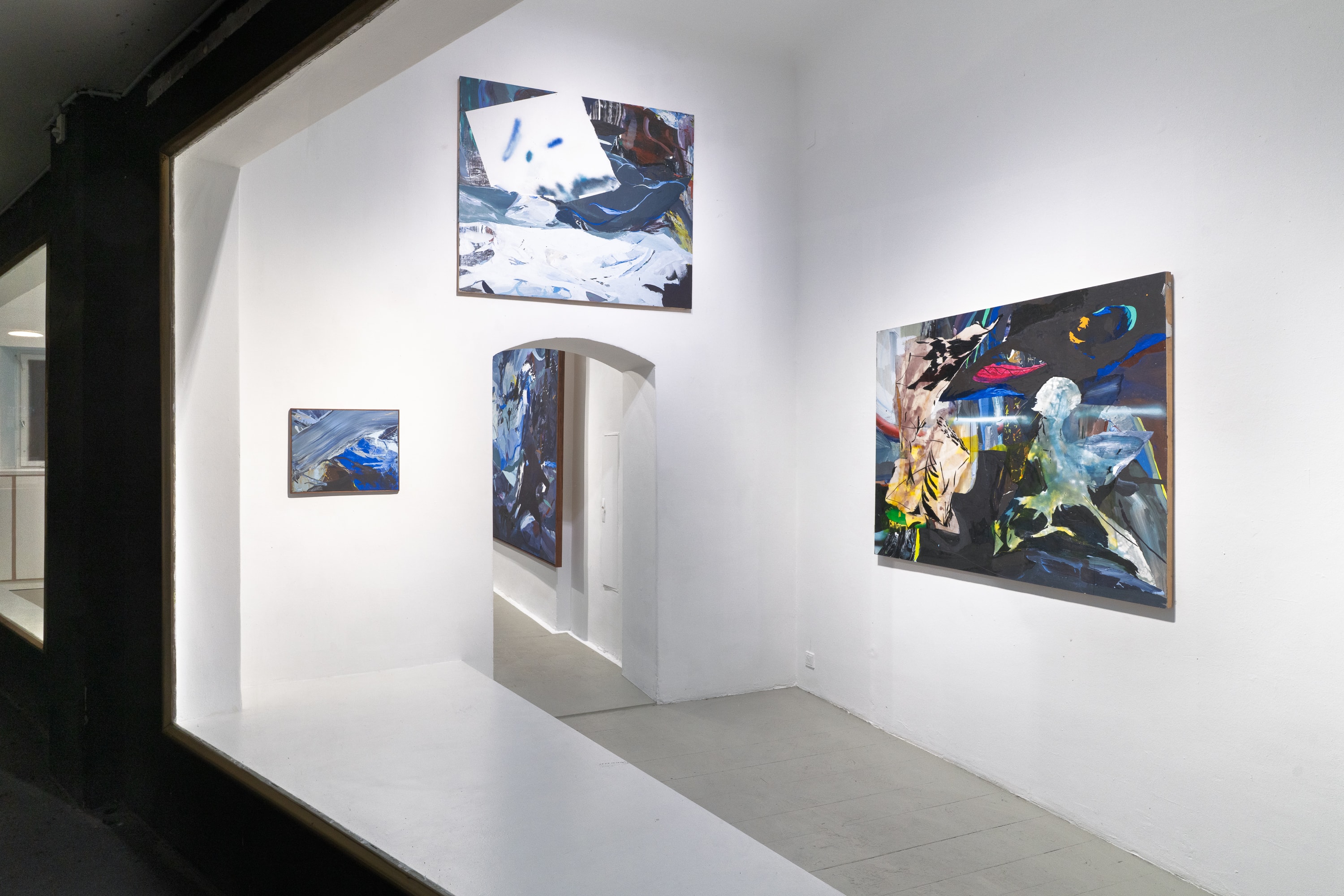
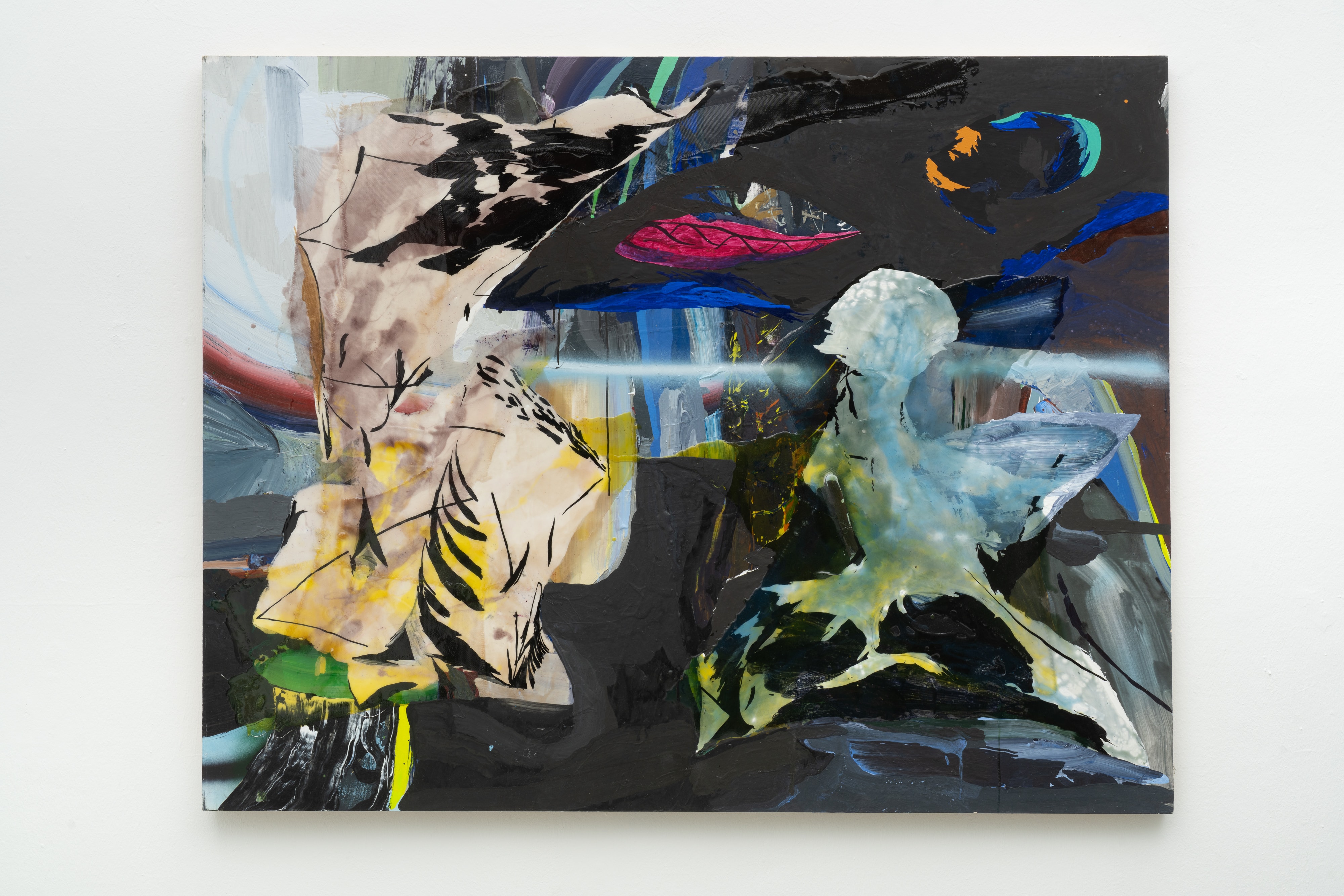
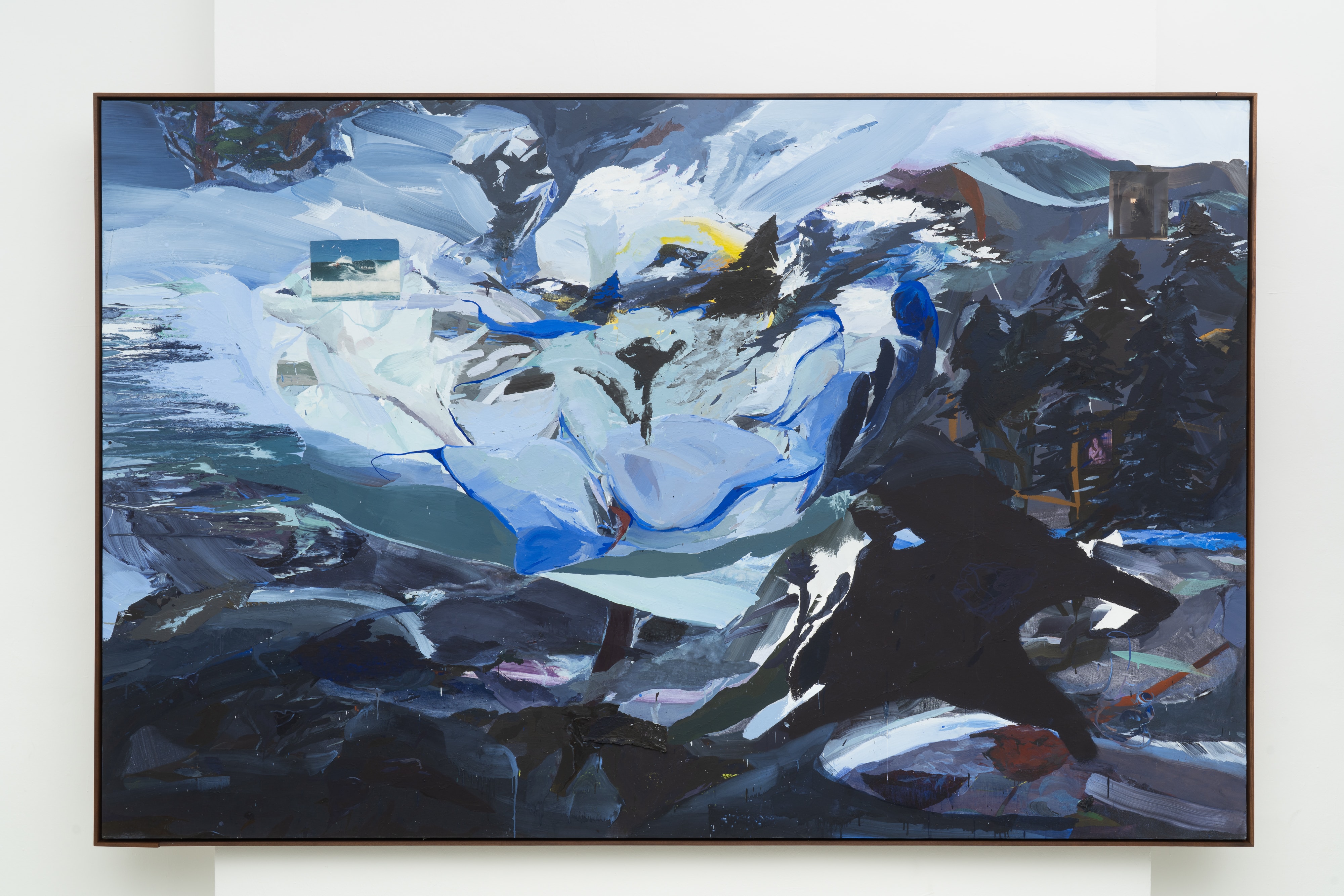
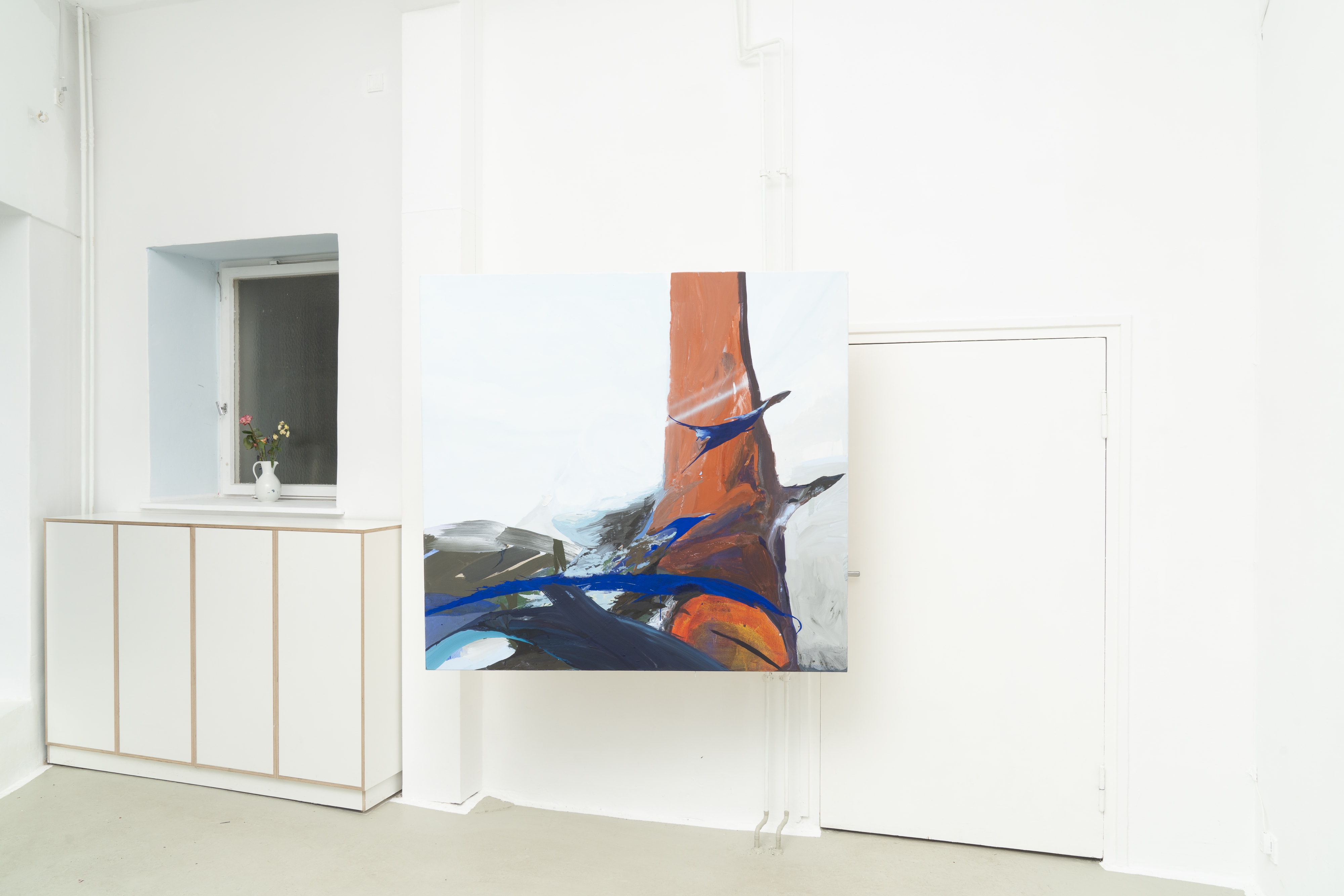
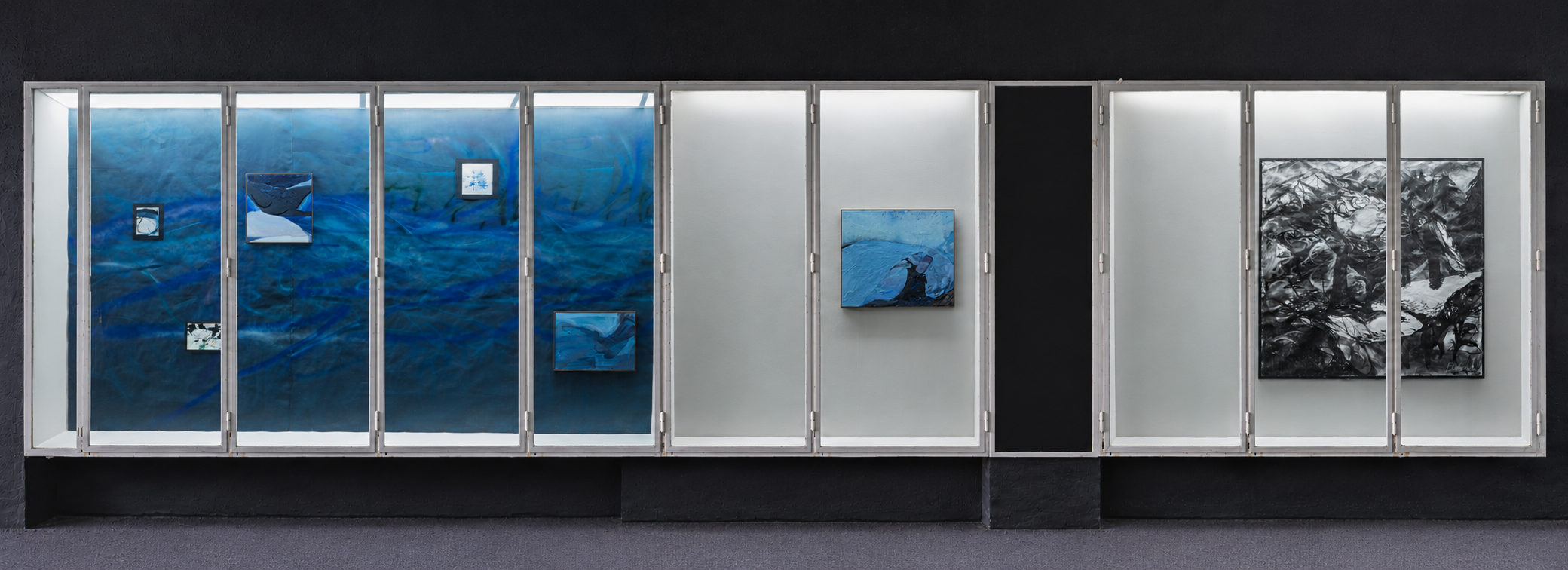
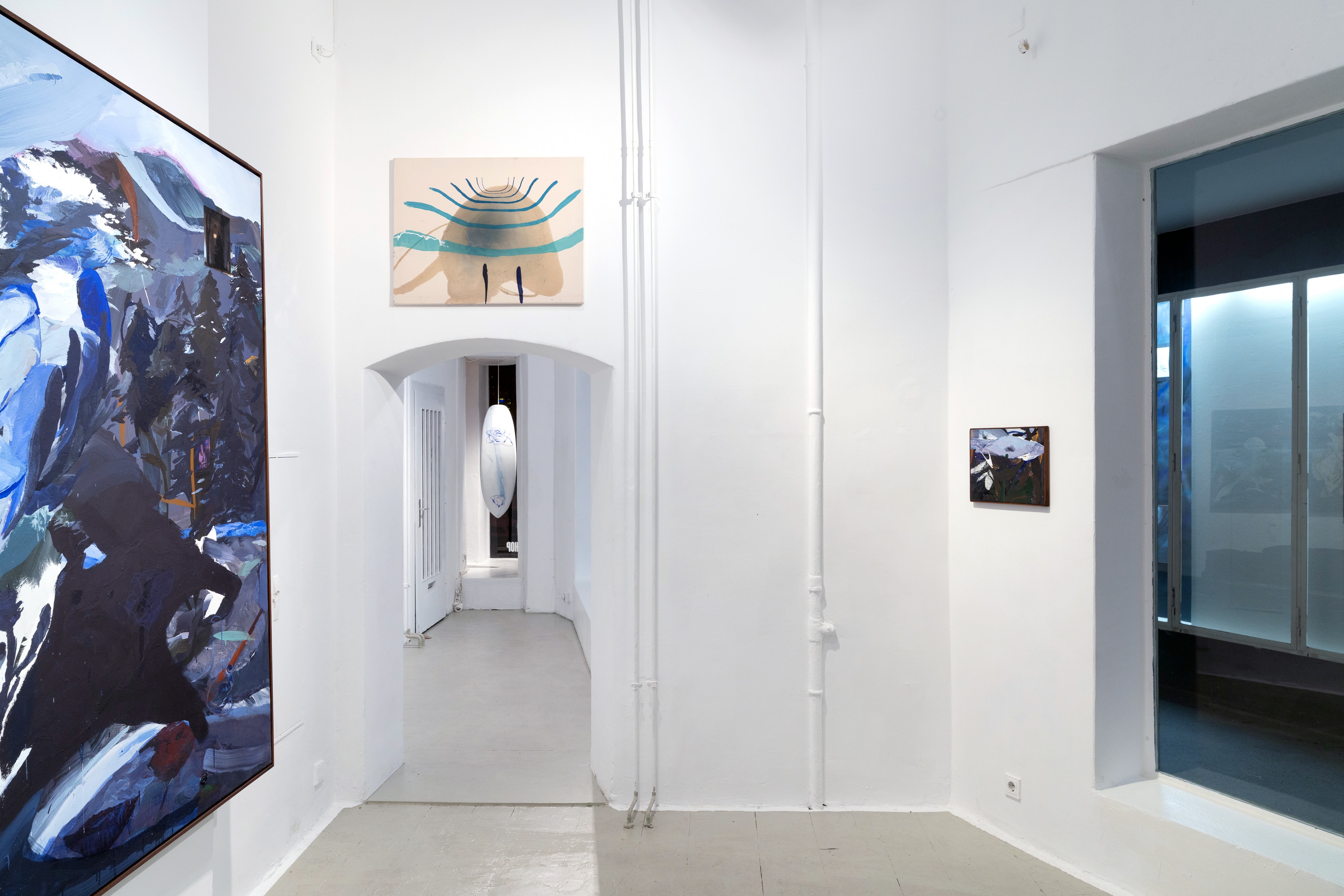
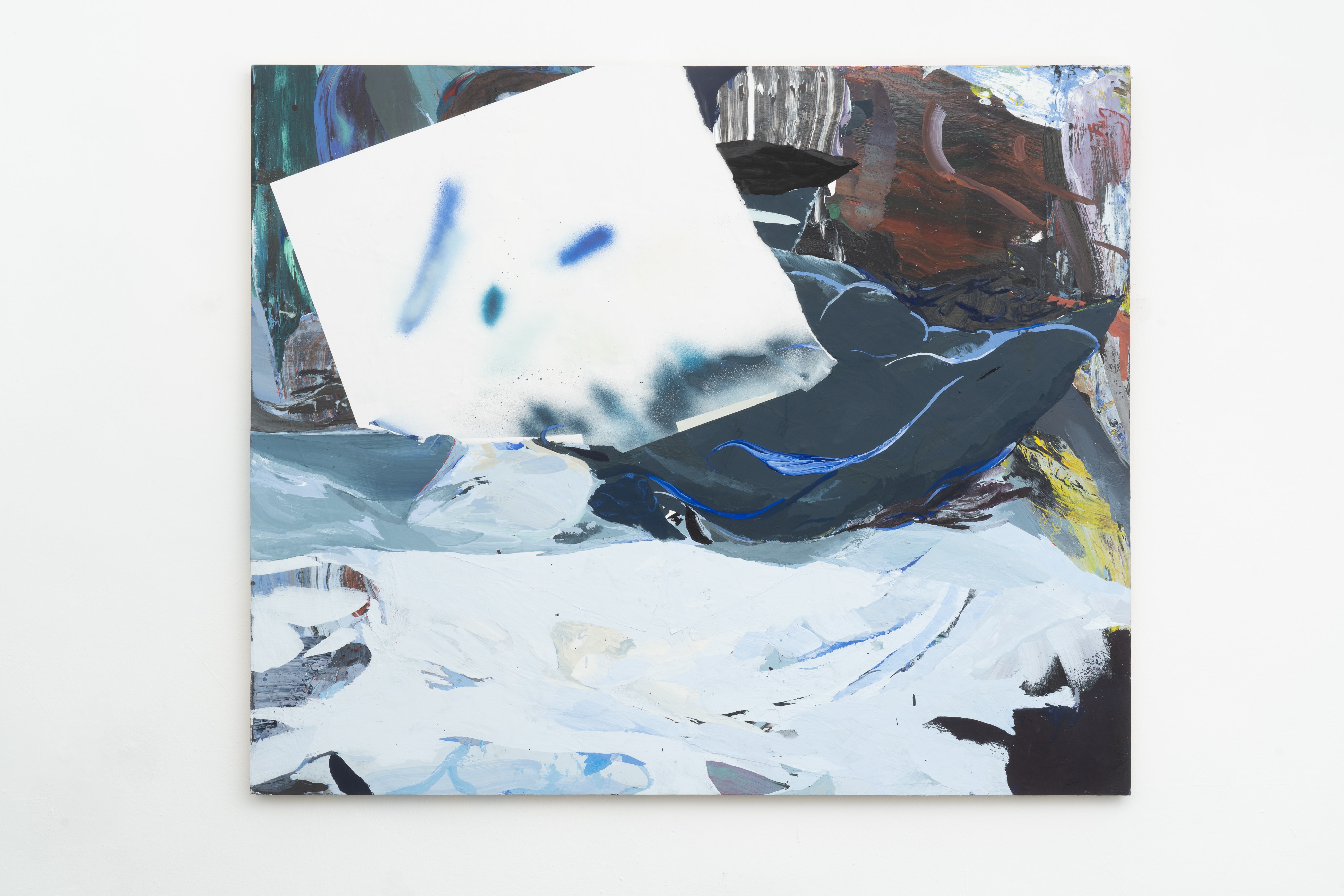
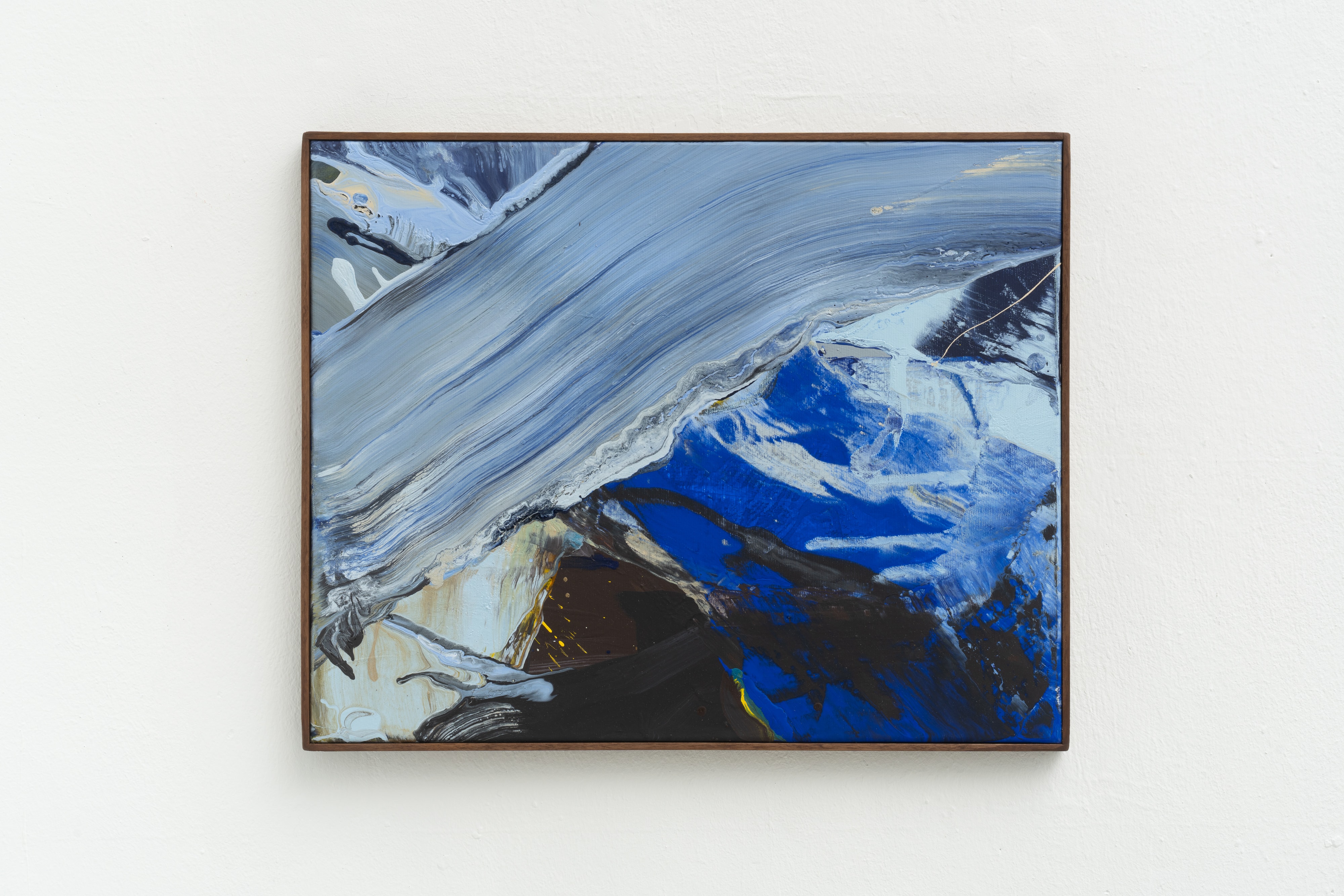
When you stand before Martin Blake’s paintings, you are standing by the water. Not on a specific shore, but at that edge where sight gives way to the surging motion of the water. Blue in every shade—from milky icy white to cobalt to nearly black indigo—permeates the works like the ebb and flow of the tides.
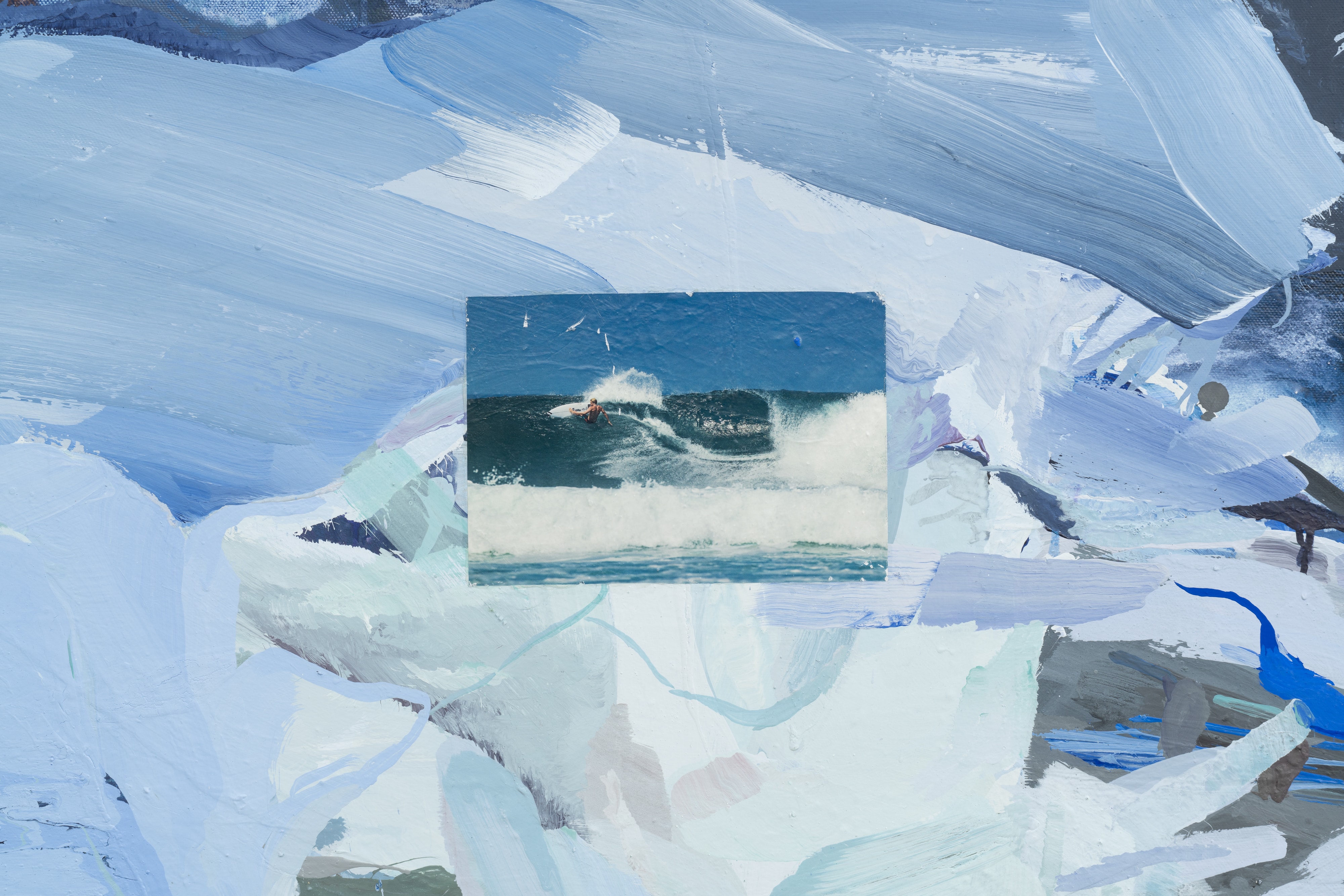
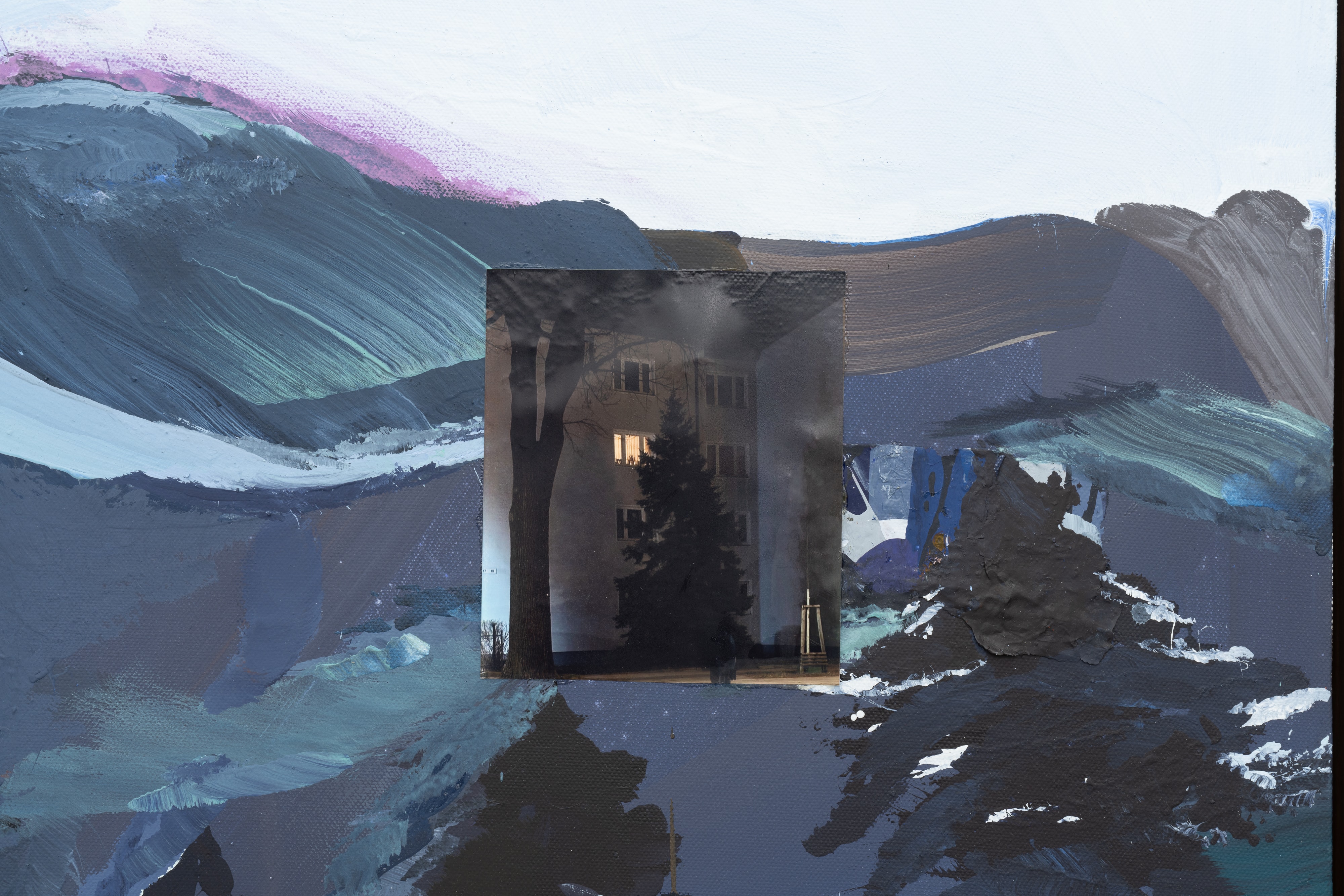
The elemental force of water is evident in Blake’s works: the roaring spray that hurls itself into and over everything that stands in its way. And yet his paintings appear almost controlled. One can see the struggle over composition in them. Spontaneous arrangements and pasted-on photographs, which allude to personal references, are washed over or engulfed by the waves. Elsewhere, treetops rise from the currents. Dense, almost overcrowded zones border on vast, breathing expanses. Glossy, poured sections meet dry, impasto-like traces; sharply defined edges meet soft spray mist. The eye finds no firm footing. It is carried along.
There are no certainties, except that the water seeks its own path. Nevertheless, Blake succeeds in countering the breaking, pulling, and flowing with places that assert themselves within the waves like artifacts of our culture.
The ocean becomes a metaphor for something greater than the individual self: a boundless space where interior and exterior, landscape and memory, figure and color merge into one another. It becomes a stream of consciousness.
Growing up in California inevitably means coming into contact with skateboarding and surfing. Perhaps it is this bodily knowledge that is also embedded in the paintings: reading a line, waiting for the right moment, maintaining balance on a moving surface.
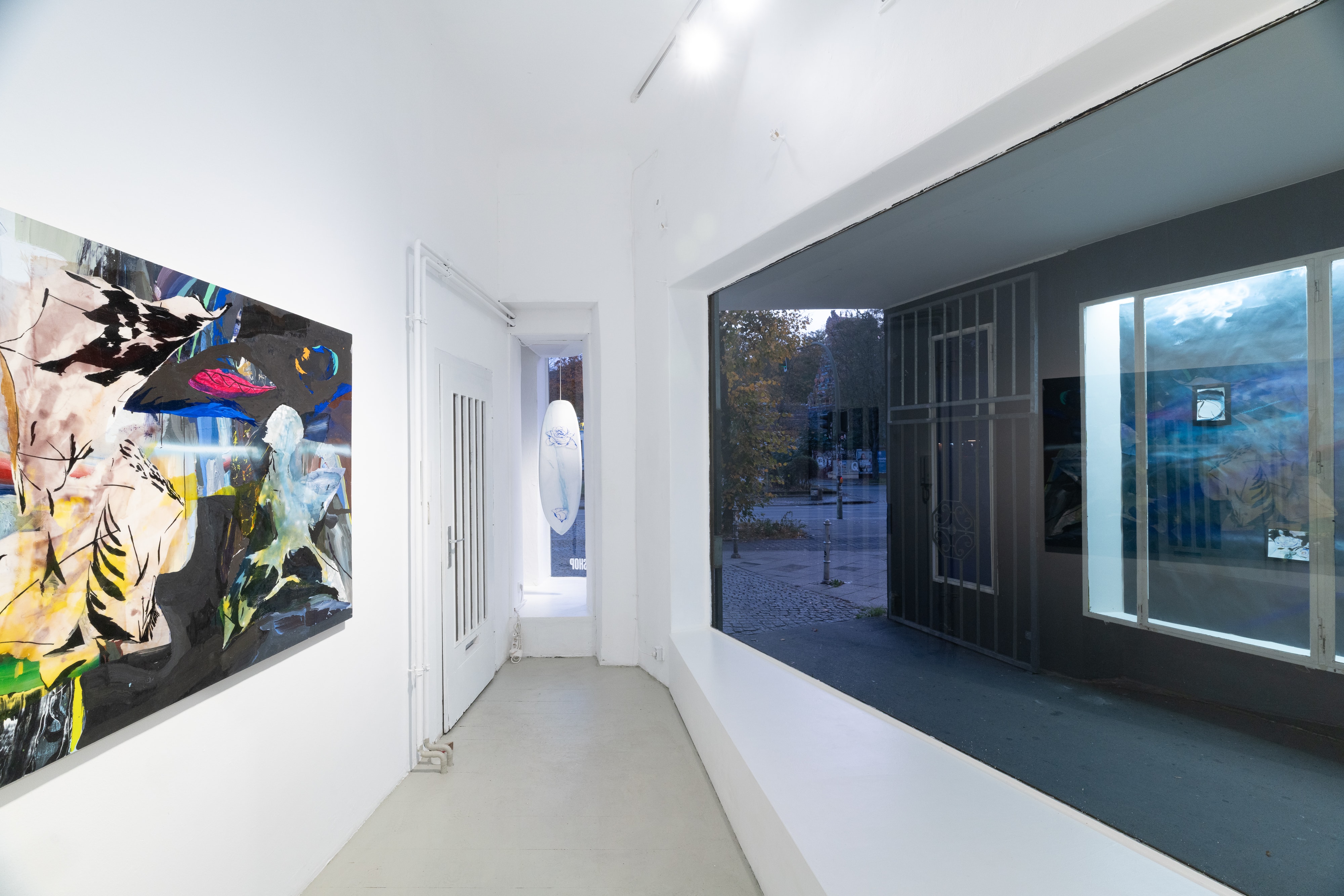
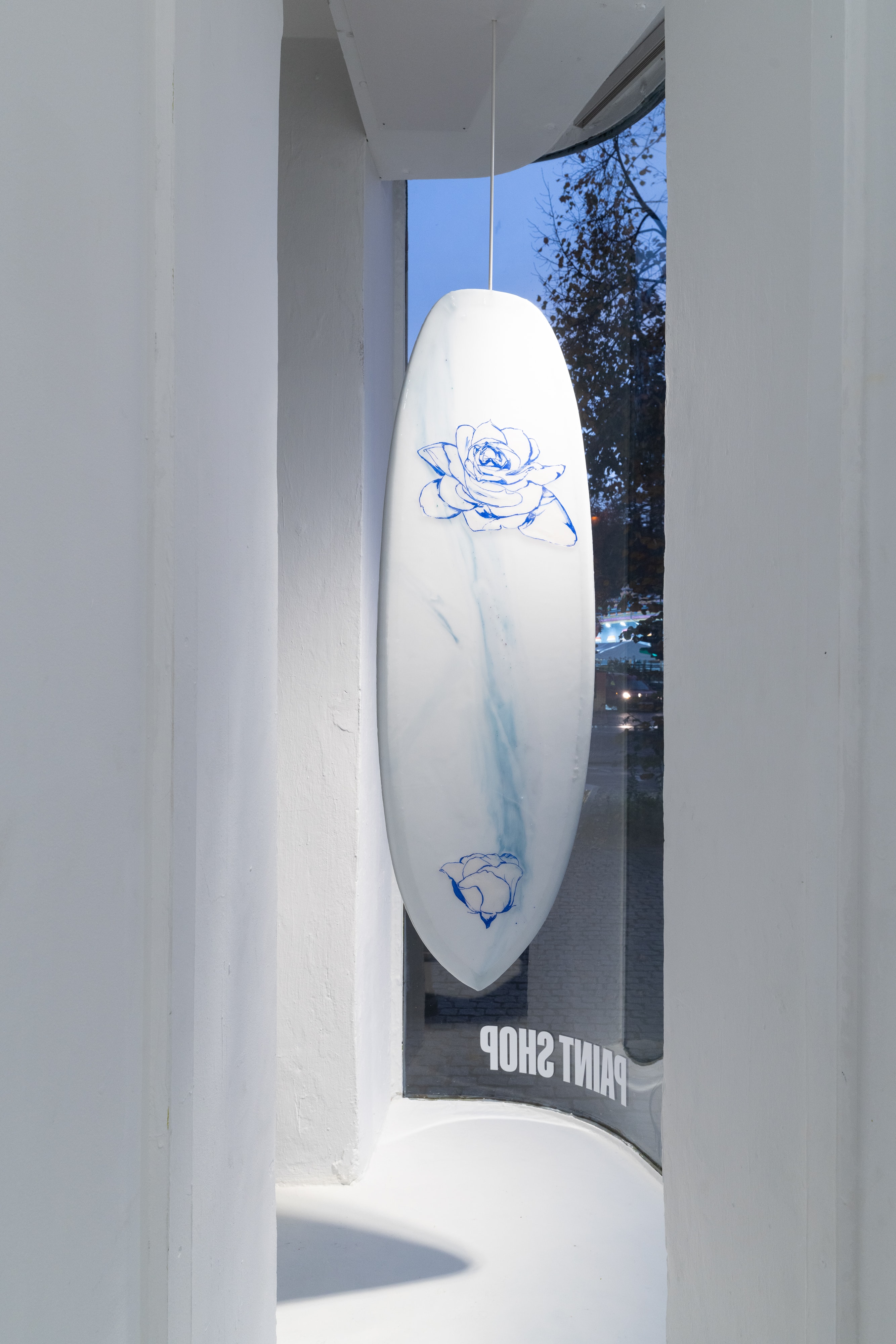
The connection between origin and painting is most evident in the surfboard that Blake built by hand, painted, and coated with epoxy resin. Erected in the room, the board becomes a stele, almost an icon or an altarpiece: an object that once served to glide across the water. Water has always been a symbol of baptism and purification, of flood and new beginnings. Paddling out at dawn has something of a ritual about it; waiting for the wave has something of a prayer. Anyone who surfs knows that the sea cannot be controlled and that the moment of joy arises precisely from this acceptance.
The ocean becomes a metaphor for something greater than itself.
When you look at the board, you no longer think of it as a piece of sports equipment. Its outline—narrow at the ends and wide toward the center—is that of a leaf. The shape of a surfboard isn’t invented; it’s taken from the water, sanded down until nothing offers resistance anymore. In the same way, a leaf finds its shape: by yielding to wind, rain, and light. Both are responses to a current.
The wave does not belong to the sea alone. It returns in the edge of a petal, in the veins of a leaf, in the way a rose unfolds layer by layer from its center. Blake’s rose trees, whose crowns rise like whirlpools above the dark horizon, demonstrate this. What grows follows the same movement as what flows. And neither can be forced. A plant takes what it needs and grows where there is light. Those who tend to it can only create the conditions and then step back. It is the same in painting. The paint runs, pools, breaks up, and dries—perhaps differently than the hand intended. Blake intervenes, defines edges, resists—but he also knows when to stop. Perhaps therein lies the subtlest gesture of these works: allowing the painting to have what it desires.
Der Paint Shop freut sich, erstmals Arbeiten von Martin Blake in der Einzelausstellung Ambient Flower Reminiscence zu präsentieren.
Berlin liegt nicht am Meer.
Die Kinder einer Stadt im Landesinneren werden selten nachvollziehen können, wie stark es Heranwachsende prägt, das Wasser vor der Haustür zu haben. Ähnliches gilt vermutlich für die Berge.
Wer vor den Bildern von Martin Blake steht, steht am Wasser. Nicht an einem bestimmten Ufer, sondern an jener Kante, an der das Sehen ins Treiben übergeht. Blau in allen Temperaturen, von milchigem Eisweiß über Kobalt bis zu fast schwarzem Indigo, durchzieht die Arbeiten wie eine Gezeitenbewegung.
Die Urgewalt des Wassers ist in Blakes Arbeiten zu erkennen: die tosende Gischt, die sich in und über alles wirft, was sich ihr in den Weg stellt. Und doch wirken seine Bilder fast kontrolliert. Man sieht ihnen das Ringen um die Komposition an. Spontane Setzungen und aufgeklebte Fotografien, die auf persönliche Bezüge verweisen, werden von den Wogen umflossen oder verschlungen. An anderer Stelle ragen Baumkronen aus den Strömen. Dichte, fast überfüllte Zonen grenzen an weite, atmende Flächen. Glänzend geschüttete Partien treffen auf trockene, pastose Spuren, scharf geschnittene Kanten auf weiche Sprühnebel. Das Auge findet keinen festen Stand. Es wird getragen.
Es gibt keine Gewissheiten, außer dass sich das Wasser seinen Weg sucht. Trotzdem gelingt es Blake, dem Brechen, Ziehen und Fließen Orte entgegenzusetzen, die sich wie Artefakte unserer Kultur in den Wogen behaupten.
Der Ozean wird zum Bild für das, was größer ist als das einzelne Ich: ein Raum ohne Ufer, in dem Innen und Außen, Landschaft und Erinnerung, Figur und Farbe ineinander übergehen. Er wird zum Bewusstseinsstrom.
In Kalifornien aufzuwachsen heißt wohl unvermeidlich, mit dem Skaten und Surfen in Berührung zu kommen. Vielleicht ist es dieses Körperwissen, das auch in den Bildern steckt: das Lesen einer Linie, das Warten auf den richtigen Moment, das Gleichgewicht auf einer Fläche, die sich bewegt.
Am deutlichsten wird die Verbindung von Herkunft und Malerei im Surfboard, das Blake von Hand gebaut, bemalt und mit Epoxidharz überzogen hat. Aufgerichtet im Raum wird das Board zur Stele, fast zur Ikone oder Altartafel: ein Gegenstand, der einmal dazu diente, über das Wasser zu schweben. Das Wasser ist seit jeher Bild für Taufe und Reinigung, für Flut und Neubeginn. Das Hinauspaddeln in der Frühe hat etwas von einem Ritual, das Warten auf die Welle etwas von einem Gebet. Wer surft, weiß, dass sich das Meer nicht beherrschen lässt und dass der glückliche Moment gerade aus diesem Einverständnis entsteht.
Vor dem Board denkt man nicht mehr an ein Sportgerät. Sein Umriss, an den Enden schmal und zur Mitte hin weit, ist der eines Blattes. Die Form eines Surfboards wird nicht erfunden, sie wird dem Wasser abgenommen, so lange geschliffen, bis nichts mehr Widerstand leistet. Auf dieselbe Weise findet ein Blatt seine Gestalt: im Nachgeben gegenüber Wind, Regen und Licht. Beide sind Antworten auf eine Strömung.
Die Welle gehört nicht dem Meer allein. Sie kehrt wieder im Rand eines Blütenblatts, in den Adern eines Blattes, in der Art, wie sich eine Rose Schicht um Schicht aus ihrer Mitte heraus entfaltet. Blakes Rosenbäume, deren Kronen wie Strudel über dem dunklen Horizont stehen, zeigen es. Was wächst, folgt derselben Bewegung wie das, was fließt. Und beides lässt sich nicht erzwingen. Eine Pflanze nimmt sich, was sie braucht, und wächst dorthin, wo Licht ist. Wer sie pflegt, kann nur die Bedingungen schaffen und dann zurücktreten. So ist es auch in der Malerei. Die Farbe verläuft, sammelt sich, bricht auf und trocknet, vielleicht anders als die Hand es wollte. Blake greift ein, setzt Kanten, hält dagegen, aber er weiß auch, wann er aufhören muss. Vielleicht liegt darin die leiseste Geste dieser Arbeiten: dem Bild zu lassen, was es bekommen möchte.